Overview:
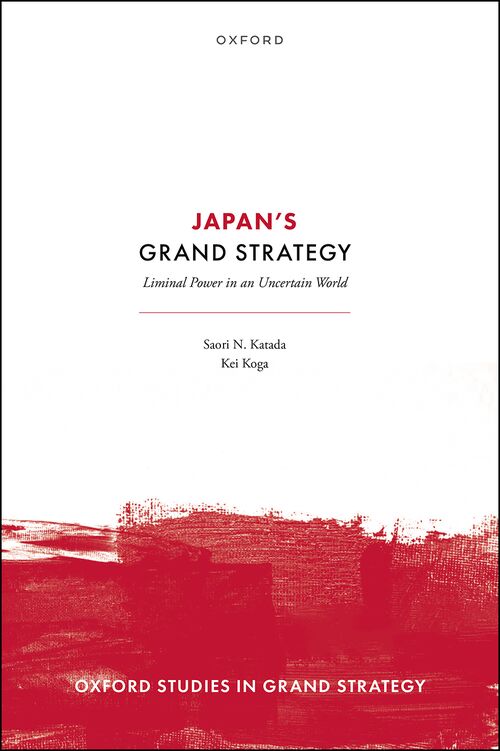
・Presents a big-picture understanding of how Japan has managed its foreign relations and how its grand strategies were shaped at different time periods
・Identifies and analyzes three elements that contribute to each critical juncture: an anticipated or actual shift in the global or regional strategic balance; the perceptions and decisions of core domestic decision-makers in response to the shift; and the domestic decision-making environment as a conditioning context
・Provides a comprehensive historical overview of Japan's foreign relations and its grand strategy
・Utilizes primary and secondary sources in Japanese and reflects rich diplomatic scholarship in Japan
Description:
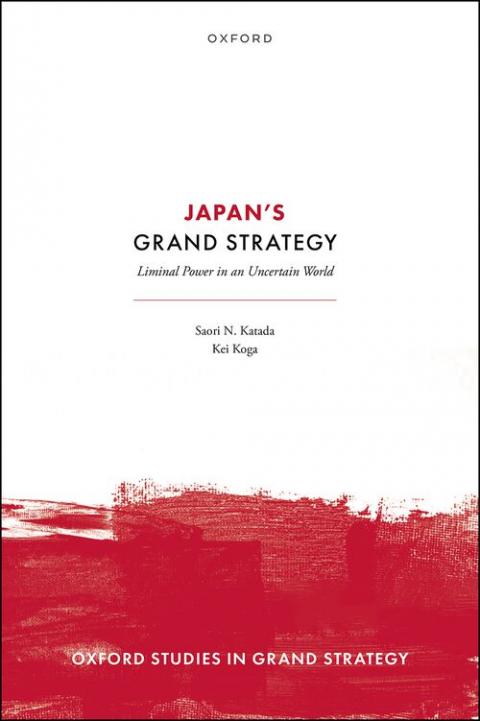
As a liminal state with contrasting identities, Japan often struggles to define its consistent strategic objective due to its fluctuating power status and social role in international relations. In this volume Katada and Koga employ a historical institutionalist approach to examine the evolution of Japan's grand strategy as a liminal power from the Meiji period, starting in 1868, to the present. The authors explore four historical and contemporary "critical junctures" as key determinants of the shifts in Japan's grand strategies: the Meiji era, the inter-war era between World War I and II, the Cold War era, and the Post-Cold War/Indo-Pacific era. In particular, they focus on the contemporary era during which Japan has established its Indo-Pacific grand strategy featuring a "Free and Open Indo-Pacific." As the strategic environment changed in each period, the authors examine how a window of opportunity opened that offered Japan's core decision-makers a chance to construct - or reconstruct - the country's grand strategy. The Oxford Studies in Grand Strategy is a major new series of cutting-edge monographs that examine the grand strategies of states, and those intergovernmental organizations and nonstate actors who credibly aspire to sovereignty. Books concentrate on the contemporary aspects of grand strategy, while paying due respect to the historical antecedents of a nation's grand strategy and their relevance for a leadership's current choices. The series is pluralistic in terms of theory and method, and maintains a broad view of the ways, means, and ends that undergird a grand strategy. Analytical and explanatory in contribution, books in the series feature a rigorous analysis of the interaction between domestic factors and global forces and provide a clear understanding of how that interaction shapes a grand strategy's formulation, codification, and implementation.
ISBN : 9780198872627





まだレビューはありません



 メール
メール